
Day One updated to v1.7
My favorite journaling application Day One has been updated for both Mac and iOS. Amongst the best new features are photo’s, location checkins using Foursquare and weather. They have also updated the markdown engine. I use it all day to capture what I do as well as log all my activities (such as creating this post or committing code, see Bread crumbs in Day One - The Hiltmon).
Since this new version is sandboxed, the command line client has been moved. You now have to download and install it manually from here. After that, all scripts will work just fine again.
My first computer - Sinclair ZX81
With the Commodore 64 turning 30 today (See: BBC News - Commodore 64 turns 30: What do today’s kids make of it?), I started thinking about my first computer, the Sinclair ZX81 (see it on Wikipedia), also called the Timex Sinclair 1000 in the USA.
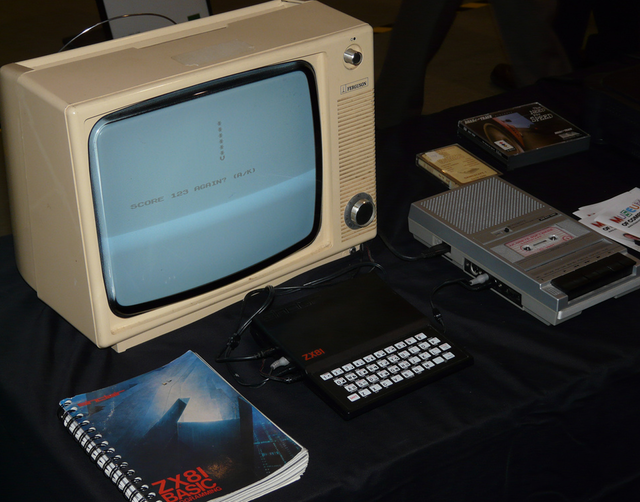
Photo of Sinclair ZX81, tv and tape (c) Mike Cattell on Flickr (because I have none).
The year would have been 1982, I was an awkward teenager, and this new device changed my world. It had a Zilog Z80 CPU running at 3.25MHz, 1KB RAM, 8KB ROM, was connected to a portable Black and White TV for display and used a battery powered manual cassette tape player for external storage. We got it a year before the Commodore 64 came out in our region.
Lead the Business
There exists a common situation in business where management wants to take the business in a certain direction, but the technical and operations staff declare that it cannot be done. They then bring out a litany of reasons which boil down to two: the current systems cannot do it and current processes cannot support it. Therefore, management cannot make the change. And if management cannot make the changes, may the business cannot compete, cannot be successful and cannot continue.
If the NBC Olympics team did the NFL
The current NBC Olympics coverage is the absolute worst thing to ever happen to TV, sports and the Olympics. Talk about #NBCFail, here’s it is in context if the NBC Olympics team were responsible for NFL broadcasts:
- You would only see games played by one chosen team
- Only people with cable subscriptions could watch the chosen game of the week
- Only people with cable subscriptions could watch the selected game on the internet
- Only people with cable subscriptions could read about the game in the newspaper
- NBC will ensure other broadcasters do show any clips of any games on their channels or on the internet at any time
- Expats outside the USA will be unable to watch any NFL, ever
- They would only show the plays by this chosen team where they score points, to protect the audience from watching the boring bits of the game (like the actual game itself)
- One exception to the scoring play rule: if another team does something completely stupid or embarrassing, they’ll show that too, but only a short clip, and repeat it many times
- The one game shown would be tape delayed until Thursday night to prepare the audience for the upcoming weekend’s games (which they cannot watch)
- While the other team has offense, or the chosen team is not scoring, they will show hours of sad, sobby backstories about chosen team’s players tough upbringings
- They would never show any injuries to protect the feelings of the audience
- They would never show any umpire decisions to protect the feelings of the audience
- They would never show any cheerleaders to protect the feelings of the audience
- They would never show any team changeovers to protect the feelings of the audience
- When people complain on twitter, they will “embrace the feedback”, and ignore it (oh wait, this is the third olympics I’ve seen and they’re still ignoring the complaints)
- They will interrupt the stream of advertising only for a few moments every hour to show the scoring play, backstory or softball interview with an old player from the chosen team
- The commentators will, of course, have never watched an NFL game before, being chosen for the whiteness of their teeth or largeness of their, er, eyes.
- If the chosen team loses, they will, instead, replay an ancient game when the chosen team won
- NBC will claim a ratings win for NFL (because it’s the only way to even get a glimpse of a game, and the competition shows low rating reruns at the same time)
- NBC News will, of course, announce all game results on the day of the game, thereby spoiling the actual Thursday night prime time show
The value of Apps
The online conversation on the Sparrow sale continues unabated. But in amongst all the vitriol, I found some amazing articles written long before the sale pretty much predicting how it is now. Here are some great quotes and links.
Guy English, in Software Sea Change:
An Application represents the developer’s best effort at creating software that applies the capabilities of the device to solving a specific problem. Making people laugh is not a problem an Application can solve; it’s not about the device it’s about the person using it.
Low app prices unsustainable
David Barnard, of AppCubby, writing in The Sparrow Problem, where he competently works out that the sales and income numbers for Sparrow were not enough to sustain the team, and therefore the business, concludes:
The age of selling software to users at a fixed, one-time price is coming to an end. It’s just not sustainable at the absurdly low prices users have come to expect. Sure, independent developers may scrap it out one app at a time, and some may even do quite well and be the exception to the rule, but I don’t think Sparrow would have sold-out if the team — and their investors — believed they could build a substantially profitable company on their own. The gold rush is well and truly over.
How many 99c apps it takes to afford that guy
Drew Crawford, jumping in on the Sparrow story in Let’s talk about Sparrow, actually covers another area I have been trying to find the words for, why good, experienced software developers, like myself, cost real money:
Let me tell you how it actually is, because I write iOS apps. A fully-dedicated senior iOS developer is way more expensive than you think. I’m not talking about “some guy whose LinkedIn profile says he is a senior iOS developer, let’s send his profile to HR.” I mean, a person who can read your ARM assembler, lecture on the finer points of Core Data, coordinate with graphic designers, draw mockups, tell you what is going to pass Apple review, solve customer problems, be a primary on the sales call with the client, negotiate the cost, write the proposal, know what’s in the HIG, come up with a class diagram that doesn’t suck, give presentations to management, train any developer in your organization, and actually get the coding done. Specifically, a guy who you can lock in a room with a Macbook for three months and he emerges without any oversight or management from anyone, with Sparrow.app. That guy can go from interview to interview and never even hear a starting offer under $125k, or $175k in the valley. Never even hear. That guy has Apple HR calling him saying “we know we can’t poach you, but maybe you can recommend someone?” Apple HR.
Talent Acquisitions and Product Casualties
This week, Google purchased Sparrow SAS, the company that made the very popular Sparrow mail application for Mac and iOS. But they did not buy the company for the product, the bought the company for its people - the talent. Sparrow, the product, is done for.
Facebook also executed a talent acquisition on Acrylic, makers of Pulp, an RSS reader, and Wallet, a secure store. Both these products are now dead.
This is not the first or last time this will happen. Larger firms need talent to push their own products, but this talent does not directly apply for jobs with them. So, they need to buy the indie companies this talent starts up to gain access to these resources.
Joining the SSD Club
On Friday, I joined the SSD club. That’s the Solid State Drive club, not the Special School District or the Social Security Disability clubs. I installed a OWC Mercury Electra 3G 240GB SSD in my Mid-2009 MacBook Pro to replace my never working DVD drive.
I purchased the kit that included the bracket (they call it a data doubler), the tools and the SSD:
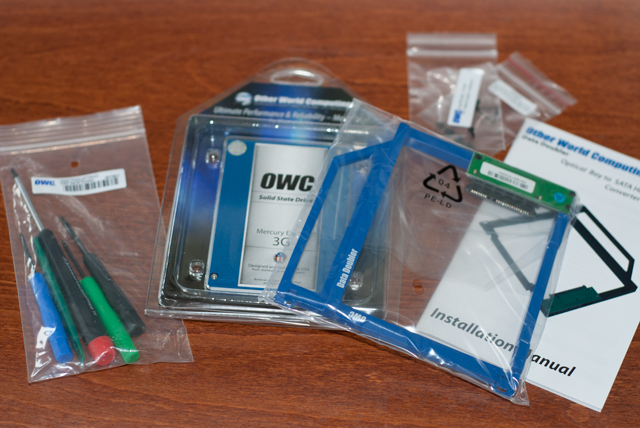
Installation was easy, I used the video and the manual that came with it.
The 10-year rule
If you aren’t willing to own a stock for 10 years, don’t even think about owning it for 10 minutes. Warren Buffett
I was just messing around in Google Finance today after reading that Microsoft made its first quarterly loss since going public (see Washington Post), and decided to take a look at our favorite tech stocks and see how they would have fared under Buffet’s 10-year rule.
| Company | 10 Year Return |
|---|---|
| Apple | 6,893% |
| Google (1) | 434% |
| IBM | 168% |
| Yahoo | 145% |
| Intel | 41% |
| Dow Jones | 38% |
| Microsoft (2) | 14% |
Source Data and Graph: Google Finance.