
User Experience Shmecsperience
We designers of software spend a lot of our time thinking about user experience. We try to eliminate complexity, simplify interactions and to create delightful experiences.
Reality: Most users don’t care about experience.
We, who make and live in software, value such software, value our time and seek out such experiences. We understand how hard it is to make them. We take the time to learn products and find ways to integrate them into our lives.
SonicWall NetExtender for OS X Mavericks
UPDATE: 10.9 or above users, use the Sonicwall Mobile Connect app on the Mac App Store (or learn more at Sonicwall Mobile Connect for OS X Mavericks).
TL;DR: Download from https://sslvpn.demo.sonicwall.com/cgi-bin/welcome. Follow the admin login instructions, then look for NetExtender / Client Downloads.
UPDATE: Saved a copy of the DMG at https://hiltmon.com/files/NetExtender-7.5.757.dmg as the normal login seems to be disabled. (WARNING: Link will eventually get stale).
UPDATE 2: Your company can also register and get the latest versions from MySonicwall.com.
Setup ODBC for R on OS X
Hi Folks, Please do not follow this advice, its an old article that somehow has stayed way past its welcome in the search engines. Use the RPostgresSQL package that connects directly using the C drivers, its a lot faster to set up and run. ~Hilton.
At work, we use R to analyze data and calculate risk. The data is in a PostgreSQL database, so we use the RODBC package to access the database from R.
Common Misconceptions about the App Store
Over the past few days, new and old friends have been popping up to mention they purchased TimeToCall and were surprised that I did not know that they had done so.
It turns out that this is but one of several misconceptions about the Apple App Store. So let me clarify some for you:
TL;DR
- No access to buyer’s information
- No access to reviews
- No Trials and Upgrades
We do not get buyers information from the Apple
When you purchase an app from the App Store, Apple handles all the licensing, payment and download for us. All we get to know from Apple is that
A Reliable Script File Layout
I write a surfeit1 of Ruby scripts that I use every day at work, everything from sending, transforming and retrieving files to monitoring systems to glueing platforms together. Keeping these under control, forgettable2 and maintainable is very important to me. So over the past few years, I have migrated to a file layout and programming pattern that enables me to spin these up quickly, forget about them and yet get back and maintain them when things change.
Not the Clicky Keyboard
It’s pretty popular these days for popular bloggers, writers and programmers to use mechanical-switch, or clicky, old-school keyboards like the DAS Keyboard, old IBM keyboards or the original Apple Extended Keyboard. So much so that Jeff “Coding Horror” Attwood went as far as to design the CODE Keyboard with Weyman Kwong of WASD Keyboards which looks droolworthy.
To be fair, these keyboards are amazingly good, reliable, feel great and are the best you can get. I really love them too. All the promises made in their advertising regarding your performance and pleasure are true.
BBEdit lives long and prospers
On Twitter today:
Celebrating back to school? Most of today’s undergraduates have never lived in a world without BBEdit.
@bbedit https://twitter.com/bbedit/status/374280198336028672

All our attention is focussed on the race-to-the-bottom, in-app purchase rip-offs or the current fad app, but we forget that software, well-built and well-maintained software, has no shelf life.
I still use BBEdit every day. It still doesn’t suck!
Kudos to Rich Siegel (@siegel) and his team at BareBones for consistently making such an amazing and useful application.
Intentional Complexity
John Duns Scotus’ (1265-1308) book Ordinatio: “Pluralitas non est ponenda sine necessitate”, i.e., “Plurality is not to be posited without necessity”
William of Ockham’s Razor, modern science version: “The simplest solution is often the best.”
Intentional Complexity is a manufactured situation where product configuration and operation are intentionally made difficult. It occurs when a software vendor exposes all the innards of their products to systems operators and end users.
It’s great for marketing to Managers and sales to CTO’s, but it’s rubbish for operations and business. In this post I will talk about what this is, why this is, how it comes to be, how this is bad for you and the fleeting signs of improvement that I am seeing.
ChronoSync Back to My Mac
TL;DR: You can use ChronoSync to access a remote ChronoAgent if Back to My Mac is turned on for both computers. Which means you can sync from anywhere!
I have been using the excellent ChronoSync for years to ensure that the Documents and Projects folders on my personal laptop are kept in sync, and therefore backed up, with my home OS X server.
These days I have two laptops, the personal one that lives at home and is used for Noverse work, and the work one for my day job at the fund. But sometimes when a Noverse Client calls, I’m at the office and do not have access to my personal laptop which contains their software and files.
The Little Touches
It’s the little touches that turn ordinary products into great products.
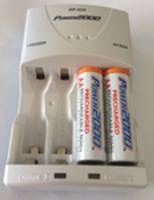
For years I have been using Power2000 NiMH batteries and their chargers that I get in Japan for use in my camera’s Flash. I use these because they really hold a charge and can handle the burst heat from a Nikon flash unit. And they store a lot of energy so they keep on flashing.
So when I moved to an Apple Wireless Keyboard and Magic Trackpad, I naturally pulled one of these sets out to use. I loaded a fully charged set of 4 and off I went.